Speculative - All Yesterday's Ideas of Mine
As time goes on, I've my own personal studies on the various animals of the world, both modern and extinct. Along the way, I have developed several theories yet to be proven.
And here, I am gonna share them with you:
=Chewing Sauropod=
It is pretty much textbook knowledge that in order to grind up their food, the mighty sauropods would swallow stones to help grind their food for them (much like how ostriches and other herbivorous birds would today).
But I would often wonder that if there are at least some sauropods that could chew their food (due to brainstorming after seeing some sauropods could in fact process food in their mouths, though extremely limited).
Thus is born the hypothetical chewing sauropod called Bunodonosaurus.

Bunodonosaurus (bunodont lizard) was an hypothetical idea of a sauropod that could grind it's food via grinding teeth, while regular sauropods just strip and swallow their food whole with minimal oral processing.
If such a sauropod exists, I would imagine it might be as common and as big as their famous cousins (Apatosaurus, Camarasaurus, Brachiosaurus, etc.).
=Ruminating Theropod=
With a good chunk of theropod dinosaurs showing a lot of bird-like traits and with a surprising amount of them being herbivorous, it seems quite probable that some of them might've had a crop (like birds did) and some of them might've used it in the same way that the modern South American bird, Hoatzin, uses it's crop as a rumen.
For those who don't know, a rumen is the stomach compartment found in cattle, sheep, deer, and other related species where their food ferments and become more digestible for the animal. This rumen is very useful for digesting the tough cell walls of plant material.
Having a diet of tough leaves, the Hoatzin uses it's crop in the same way a cow uses it's rumen, as shown below:
For those who don't know, a rumen is the stomach compartment found in cattle, sheep, deer, and other related species where their food ferments and become more digestible for the animal. This rumen is very useful for digesting the tough cell walls of plant material.
Having a diet of tough leaves, the Hoatzin uses it's crop in the same way a cow uses it's rumen, as shown below:
 |
| From "What-When-How.com" |
In thinking about this, I drew the illustration shown below:

I chose the oviraptor called Incisivosarus ('incisor lizard') as the hypothetical "ruminating theropod" because looking at it's teeth, it indicates to us that it gets very fibrous plant material, which is known to be rather tough itself. And at the same time, being part of the oviraptor family, the said dinosaur has a load of bird-like traits that would make it rather plausible for it to be the case.
=Dinosaur Egg-Eating Snakes=
When we think about what most snakes would eat, we would instantly think of mice, birds, and small lizards. While that is definitely true, there is a particular group of snakes that consume only bird eggs.
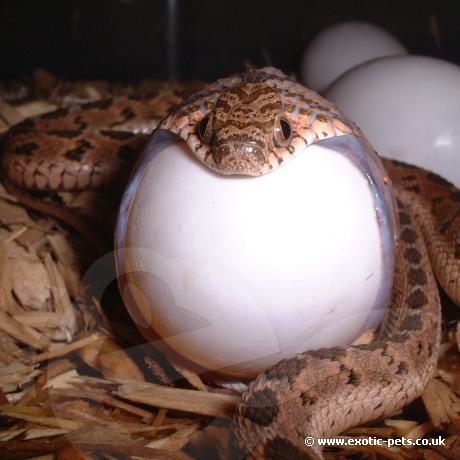 |
| African Egg-Eating Snake consuming an ostrich egg |
With this, I think there's a possibility that dinosaurs have their egg-eating snakes (whether it's their ancestors or or a case of convergence). We have fossil evidence that snakes would wait near dinosaur nests to get at the hatchlings. It does not seem far-fetched that egg-eating snakes could be amongst the nest raiders too.
=Skunks for Dinosaurs?=
The very instant we see the black-and-white bushy tail of the skunk, we would usually run for the hills in a instant! The same would be said for most mammalian predators (e.g. bears, wolves, cougars, etc.), except our poor naive dogs. The skunks' secret to it's success that in it's scent glands in it's rear to sprays a noxious smelly liquid at it's enemy. It's works quite well on other mammals because of their extremely powerful senses of smells in the majority of them.
Then, I thought about dinosaurs. A lot of dinosaurs, including the famous Tyrannosaurus rex, have been known to have extremely powerful senses of smell. With dinosaurs having this kind of superpower, it would only make sense that some or one of the mammals that live beside them would have a scent-based weapon in order to defend themselves from the hungry theropods. And as a warning to the would-be predators, they might have a black-and-white coat that is similar to that of the skunk, zorrilla, and stink badgers.
But what mammal of those days would be the possible candidate, since the three groups of 'stinkers' that have been mentioned earlier have not been around?
There is one mammal living today, but is shown to have it's family running along or away from dinosaurs:
The Solenodon
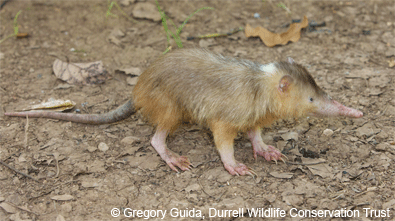
In short, it is a large insectivorous mammal (roughly the size of a domesticated cat) of the island of Hispaniola in the Caribbean. Fossil evidence has shown that the solenodon's kind has lived alongside dinosaurs, so that is one reason for the thought.
Another reason is that, in the modern varieties, the solenodons have gland in their groins that produce a musty smell akin to that of a goat. While that is not a smell that would warn off predators, it is an indication that it's kind have the capability to produce powerful smells with such glands. I could be possible that the glands in the past were used to produce horrible smells that warned off theropod dinosaurs. But when the ancestors of the living solenodon got onto the island of Hispaniola, they were the only terrestrial predators there and had no reason to produce foul-smelling smells for defense. So, as a result, their scents have became immensely diluted and used only for intra-spefici communication.
With all of this in mind, it does not seem too far-fetched that in the past, the solenodon was the 'skunk' that was the bane of all the theropods' senses of smell.
References
Nicoll, Martin (1984). Macdonald, D., ed. The Encyclopedia of Mammals. New York: Facts on File. pp. 748–749.
Starck, D. & Poduschka, W. (1982). "On the ventral gland field of Solenodon paradoxus Brandt, 1833 (Mammalia, Insectivora)". Zeitschrift für Säugetierkunde. 47 (1): 1–12.
Zanno, L., & Makovicky, P. (2010). Herbivorous ecomorphology and specialization patterns in theropod dinosaur evolution Proceedings of the National Academy of Sciences


Comments
Post a Comment