A Job that REALLY Stinks: Skunk Farming
Skunks....
When one thinks about them, we usually think of either Flower from Disney's Bambi to the slinking animal that EVERYONE tries to avoid or have been sprayed by one and have been haunted (I myself have been sprayed and it does haunt me). Most of us are lucky enough to only lucky enough to know skunk's smell just from a distance or to just smell a dead one on the highway.
With such animals being so notorious for their stench, why on earth do people both want their fur and even farm them for it!?
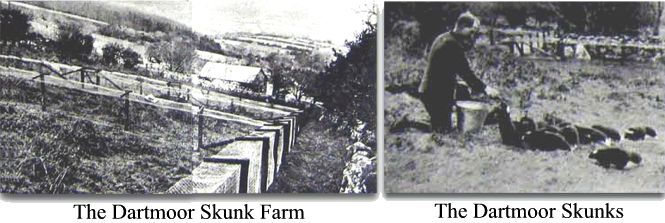 |
| Skunk Farm in the UK (Legendary Dartmoor) |
There's even thoughts about "milking" it's spray to be used to deterring molesters!
And as anyone who has ever owned a skunk could tell you that skunks are quite easy to keep (once they are de-scented, had their spray glands removed). This is because it is said that they can easily tamed (though selectively breeding for increased tameness was done), they could eat anything since they are omnivores, can be quite social, and are not picky breeders. Along with that, they could be kept in open-topped pens with simple arched fences of 3.5-4 feet in height (as opposed to the solitary caging for other species, such as mink and foxes). These pens were almost like small pastures to the skunks and they were said to even keep themselves occupied with eating the mice and insects (along with, as it was claimed, rabbits).
It was even considered
So with all of the these pros and relatively minimal cons, why is it not so popular now?
Skunk farming started around the late 1800s (there was even a skunk farm in England) and the demand for skunks was primarily strong in Europe.
However, after WWII, pelts with long hairs were considered unfashionable, the economy made purchasing fur coats (of skunks or otherwise) too costly to do, and others would even blame labeling laws that made the skunk less popular.
Today, a single skunk pelt would be worth over 5 dollars, no more than how much your regular coffee would cost.
 |
| A bulletin about skunk farming |
So, the next you complain about your job stinking, just know that your job is not farming skunks (both literally and figuredly).
What do I think of the skunk farming?
Well, I would have to say that it is an interesting bit of the fur industry and would've have been fascinating to see them more elaborate comebacks (made a small one in the 70s, but other fashion trends beat it to it). I also find it to be cool to see an animal that most people would hate or fear become a desired animal much like how livestock would be to us.
=REFERENCES=
- http://www.truthaboutfur.com/blog/skunk-fur-forsaken/
- https://www.farmshow.com/a_article.php?aid=6914
- https://www.legendarydartmoor.co.uk/skunk_farm.htm
- Lantz, D. E. (1923). Economic value of North American skunks. Washington, D.C. : U.S. Dept. of Agriculture
- Seton, E. T. (1909). Life-histories of northern animals : an account of the mammals of Manitoba. New York City: Scribner. pp. 966-994


Comments
Post a Comment